Party building column
Do not forget the original intention and keep the mission in mind
1921-2021
The 100th Anniversary of the Communist Party of China
The great river goes east, the waves are exhausted, and the romantic figures of the ages. In the starry sky of history, countless geniuses and heroes, like bright stars, radiate dazzling rays of light, illuminating the way forward in human history. They fought bloody battles, they were loyal and brave, or they were poetic and poetic, and they were laughing and laughing; some great people said that those who are romantic and romantic, also look at the present. So today, let us talk about the romantic figures of ancient and modern times, and relive the great influence and brilliant achievements they have brought us.
Qian Zhuangfei:
Make great achievements in the fight against the enemy
Warmly celebrate the 100th anniversary of the founding of the Communist Party of China
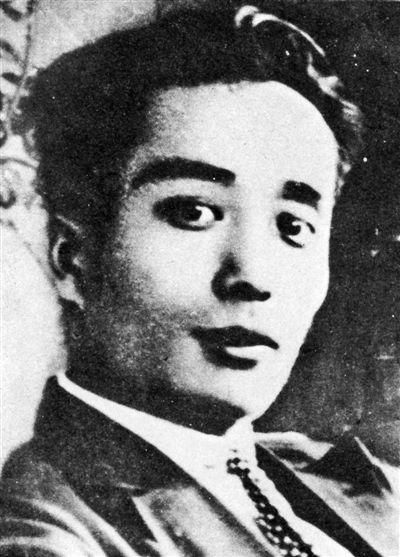
In 2009, Qian Zhuangfei was elected as one of the "100 Heroes and Models Who Made Outstanding Contributions to the Founding of New China".
Qian Zhuangfei, born in 1896, is a native of Huzhou, Zhejiang. In 1915, he was admitted to the Beijing Medical College, and after graduating in 1919, he worked in the Beijing-Suiyang Railway Hospital in Beijing. Joined the Communist Party of China in 1926.
After the failure of the Great Revolution in 1927, the party organization under the leadership of the Northern District Committee of the Communist Party of China was severely damaged. Qian Zhuangfei was transferred to Shanghai in early 1928 by the arrangement of the party organization. In the same year, he joined the Shanghai Radio Management Office, which is affiliated to the Construction Committee of the Kuomintang Government.
At the end of 1929, Qian Zhuangfei entered the Party Affairs Investigation Section of the Organization Department of the Central Committee of the Kuomintang in accordance with the party's instructions, and served as the confidential secretary of Xu Enzeng, the director of the investigation section. At the same time, the central government decided to set up a special party group with Li Kenong, Qian Zhuangfei, and Hu Di who had penetrated into the enemy's interior. The three of them fought in the heart of the enemy and were known as the famous "Three Heroes of Longtan" in our party's intelligence front. The three cooperated with each other and obtained a large amount of important information about the Kuomintang reactionary group.
From the winter of 1930 to February 1931, Qian Zhuangfei reported the Kuomintang Chiang Kai-shek's order to launch the first and second "encirclement and suppression" of the revolutionary base areas, as well as the corresponding military deployment and other important information to the Party Central Committee through Li Kenong, Chen Geng, etc., and the Red Army was correct. Decision-making, breaking the enemy's "encirclement and suppression", played an important role.
On the evening of April 25, 1931, Qian Zhuangfei, who was on duty alone, received six special urgent secret telegrams sent to Xu Enzeng from Wuhan in a row. He immediately deciphered the secret telegram. It turned out that Gu Shunzhang, who had been in charge of the protection of the Central Committee of the Communist Party of China for a long time, was arrested and betrayed in Wuhan, and he had to give up all the secrets of the Central Committee of the Communist Party of China in Shanghai. At the critical moment, Qian Zhuangfei disregarded his personal safety and promptly reported the situation to the Party Central Committee. After receiving information from Qian Zhuangfei, under the command of Zhou Enlai, the organs of the Central Committee of the Communist Party of China, the Jiangsu Provincial Committee of the Communist Party of China and the Far East Bureau of the Communist International were all transferred immediately. Qian Zhuangfei made a significant contribution to the security of the central organs of the Communist Party of China.
Then Qian Zhuangfei entered the Central Revolutionary Base. He successively served as director of the Political Security Bureau of the Central Revolutionary Military Commission and director of the Second Bureau of the General Staff Department. Participated in the Long March in October 1934. After the Zunyi Conference in 1935, he was appointed as the Deputy Secretary-General of the General Political Department of the Red Army. In April of the same year, he died in Houshan Township, Jinsha County, Guizhou Province, at the age of 39.
Qian Zhuangfei defended the security of the Party Central Committee with all his heart and loyalty, and wrote a legend in the history of the revolution. Zhou Enlai once said that Comrade Qian Zhuangfei's great achievements in the struggle against the enemy have indeed saved our party from detours, and the whole party will always remember him.
Shamingham:
Beheading doesn't matter, as long as the doctrine is true
Warmly celebrate the 100th anniversary of the founding of the Communist Party of China
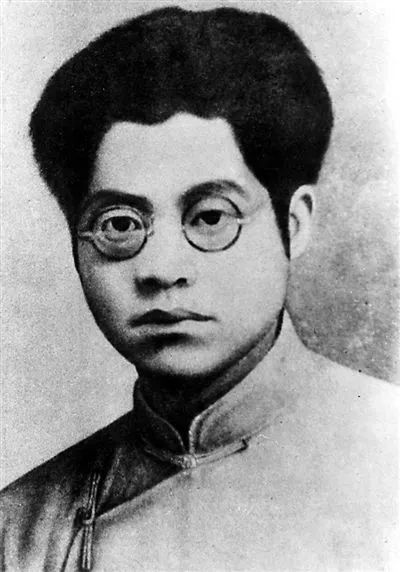
In 2009, Xia Minghan was elected as "100 Heroes and Model Characters Who Made Outstanding Contributions to the Founding of New China"
"It doesn't matter if you beheaded, as long as the doctrine is true. Kill Xia Minghan, and the later generations!" On March 20, 1928, Communist Party member Xia Minghan wrote this majestic sacrifice poem, and died heroically at the age of 28.
Xia Minghan, courtesy name Guigen, was born in Hengshan County, Hunan Province in 1900. Xia Minghan came from a famous family and loved reading since childhood. In 1917, he was admitted to the Hunan Provincial Third Class A Industrial School. During his school days, he was exposed to progressive ideas and actively participated in the patriotic propaganda activities in support of the May Fourth Movement and the struggle against the Beiyang warlords.
In 1920, with the help of He Shuheng and others, Xia Minghan came to Changsha and became the first batch of students of Hunan Self-study University founded by Mao Zedong. In 1921, through the introduction of Mao Zedong and He Shuheng, Xia Minghan joined the Communist Party of China.
In 1924, Xia Minghan served as a member of the CPC Hunan Provincial Committee and Minister of Farmers. He often went to Changsha, Pingjiang, Xiangtan and other places to learn more about the situation of farmers, pay attention to training cadres of the peasant movement, and sent revolutionary youths to study at the Guangzhou peasant movement workshop. In October 1927, Xia Minghan led the peasant riots in Pingjiang and Liuyang, which effectively cooperated with the establishment of the Jinggangshan base.
In early 1928, Xia Minghan was transferred to Hubei to work as a member of the Standing Committee of the Hubei Provincial Committee of the Communist Party of China. Before leaving, he said goodbye to his wife and daughter who had just been born, and gave his wife Zheng Jiajun a red bead with a poem: "I give a red bead as a gift, I hope your heart is like my heart. Willingness, tough tests do not change your heart."
On March 18, 1928, Xia Minghan was unfortunately arrested in Wuhan for being betrayed by a traitor. The enemy used various tortures on Xia Minghan and persuaded him to surrender. But Xia Minghan always regarded death as his home and never gave in. In the early morning of March 20, he was escorted to the execution ground. Before the execution, the enemy asked Xia Minghan what he had to say. He said loudly: "Yes, bring me a pen and paper!" So he wrote the sacrifice poem that has been extolled to this day.
Xia Minghan died heroically and gave his young life for the liberation of the Chinese people. The upright and awe-inspiring sacrifice poem he left behind inspired and inspired generations of Chinese Communists to fight bravely for their ideals and beliefs without fear of sacrifice.

Photosynthetic crab rice home
WeChat | ghxiedaojia
This is a public account with a soul