Technological frontier
Red Beach Wetland Degradation and Restoration
I. Formation of Red Beach
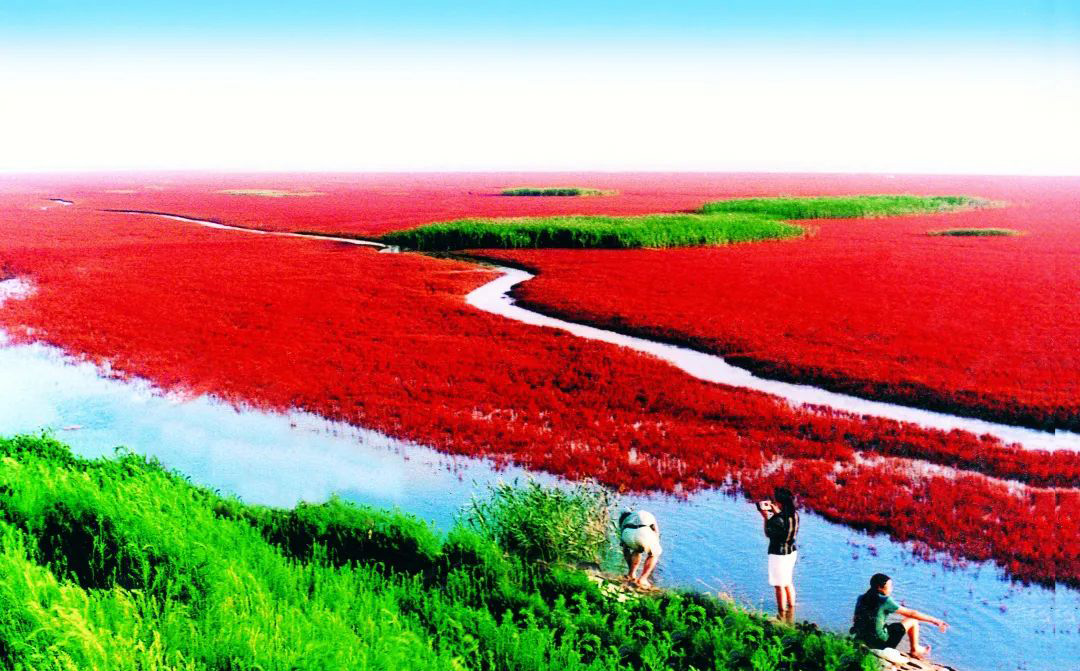
Panjin is located at the lower tip of the Nine Rivers. Driven by the river carrying sand and the sea retreat, the seabed of Liaodong Bay is continuously uplifted under the combined action of tidal current and sand siltation, forming a broad intertidal plain silt bank on the 79km coast of Panjin. tidal flats. With the siltation of rivers and the retreat of the sea, the tidal flats continue to increase. Under the leaching of river water and rain, the salinity of the bare ground of the raised tidal flats gradually decreases, which makes the pioneer plant Suaeda spp. In particular, since the completion of the Blue Ocean Embankment in 1989, the 26.3km sea-retaining embankment from Jieguanting Gate to Erjiegou [1-11] has formed a single plant community of Suaeda serrata, and the ecological landscape of "Red Beach" has thus become Formed and has the reputation of one of the "Eight Wonders of Nature".
Second, the main component of the Red Beach - Suaeda chinensis
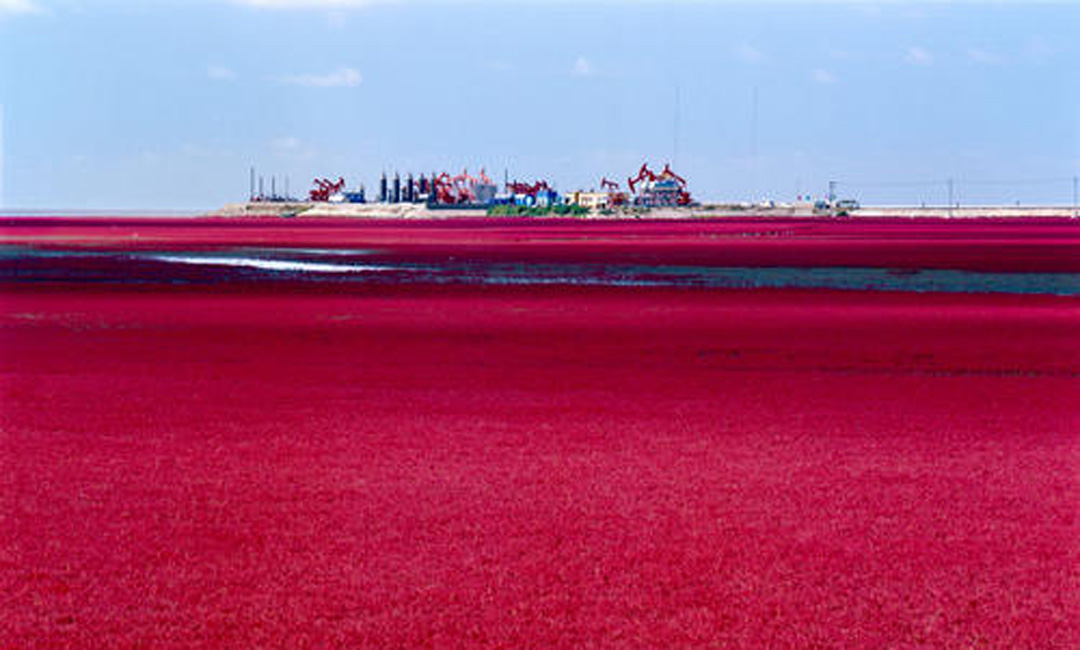
Suaeda heteroptera Kitag., also known as Artemisia salsa, Suaeda salsa, Suaeda salsa, mustard, etc., belongs to Angiospermae (Angiospermae), Dicotyledoneae (Dicotyledoneae), central seed Order (Centrospermae), Chenopodiaceae (Chenopodiaceae), Suaeda (Suaeda), is an annual herb, usually mixed with gray-green Suaeda, reed and tamarisk. It is a kind of grass suitable for saline-alkali soil -- and the only kind of grass that can survive in saline-alkali soil. It is usually distributed in the soil of about 30cm. Red longitudinal stripes, oblique, . The plant height of Suaeda chinensis can reach more than 120cm through artificial cultivation, while it is about 20cm~80cm in natural growth.
Three, the cause of color change of Suaeda chinensis
There are two main aspects to the color change of Suaeda chinensis. One is that the seedlings emerge green from March to mid-June according to the growth changes. The flowering period is pink from July to August, the fruiting period is dark purple from September to October, and the seeds are fully mature between the end of October and the beginning of November, and the seeds are light red at this time. The second is that under the combined action of seawater erosion and sunlight, Suaeda salsa gradually changes from green to pink and red, and in late autumn the color reaches the deepest, dark red or even purple; When the salt content of the soil exceeds 0.3%-1%, the Suaeda salsa grows vigorously, the whole plant is yellow-green, emerald green or dark green, and the plant is tall and lush. When the salt content is 1%-1.6%, more betalains are formed in the vacuoles of the stems and leaves of Suaeda salsa, so that the leaves show different shades of light red, red and purple.
IV. Status Quo of Red Beach Wetland
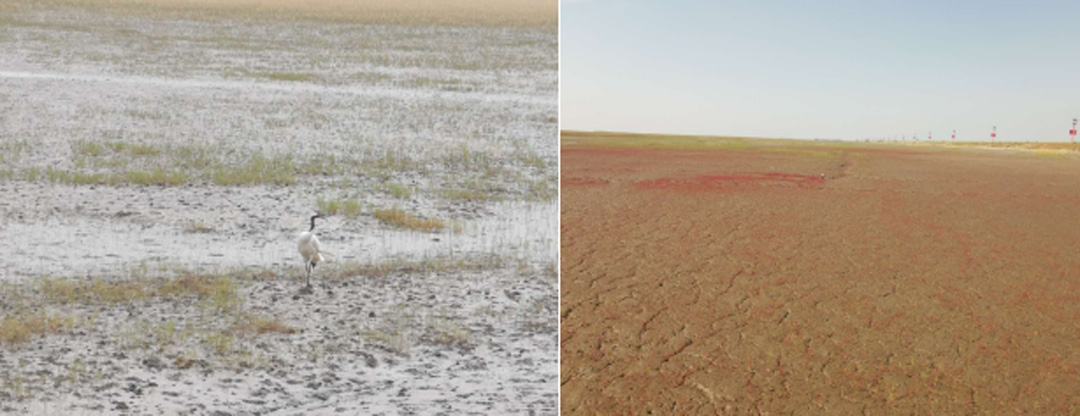
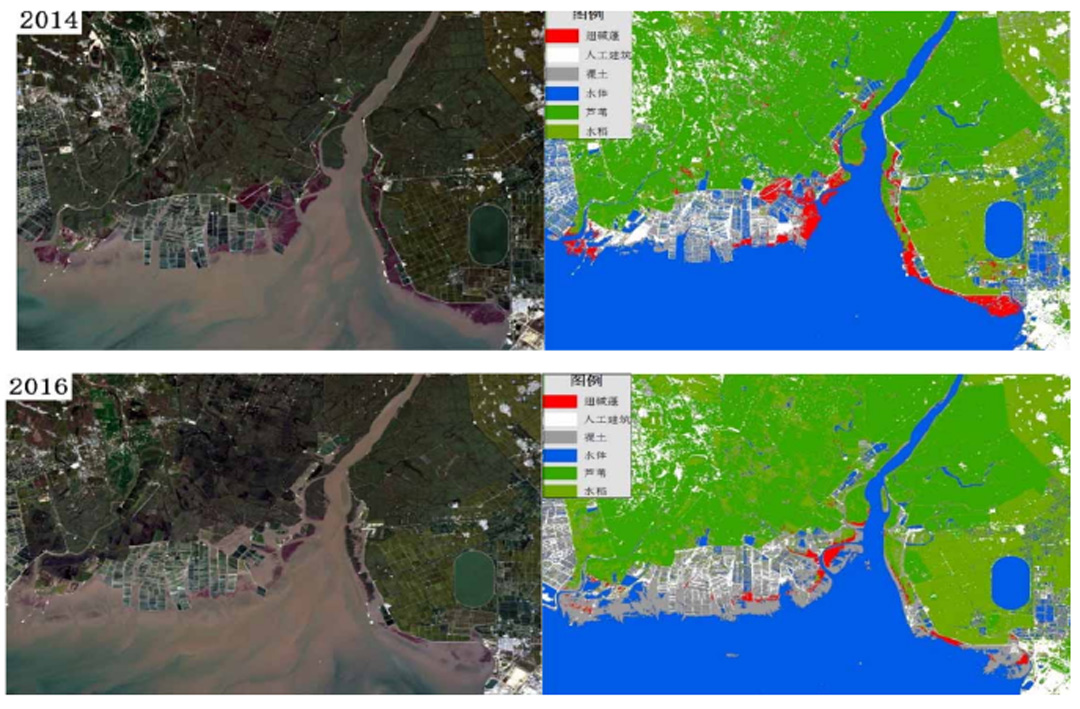
In recent years, with the continuous improvement of Liaoning's demand for marine economic development, the development of wetlands in the Liaohe Estuary has become increasingly frequent, mainly including farmland reclamation, oil and gas development, coastal tidal flat reclamation activities, and tourism development. The development and construction of the above activities have led to the decline of the natural area of the coastal wetlands in the Liaohe Estuary year by year, the serious loss of the natural coastline, the change of the distribution pattern of the wetlands, the decline of the self-purification capacity of the water bodies in the area, the degradation of the natural wetlands, the pollution of the surrounding water environment, and the rivers carrying water into the sea. The amount of water and sediment has decreased, biodiversity has also been destroyed, ecosystem services have declined, the natural growth area of Suaeda spp. has declined sharply year by year, and the area of reed growth and deserted beach areas has increased year by year.
V. Reasons for Wetland Degradation
It is mainly divided into two aspects: one is natural factors, and the other is thought factors:
I. Natural factors
1. Temperature
As an important aspect of climate factors, temperature affects the process and intensity of evaporation from water and land surfaces, and has a great impact on wetland landscape patterns. During the period from 1955 to 2015, the annual average temperature, average maximum temperature and average minimum temperature in Panjin Wetland showed an upward trend. Among them, the 31-year average temperature from 1955 to 1985 was 8.54°C, and the 30-year average temperature from 1985 to 2015 was 9.68°C, which increased by 1.14°C. The saturated water vapor pressure on the evaporation surface increases, and the saturation difference increases, which accelerates the evaporation process and makes the ground more prone to water loss, which is not conducive to the growth of wetland plants. Affect the growth of Suaeda.

2. Precipitation
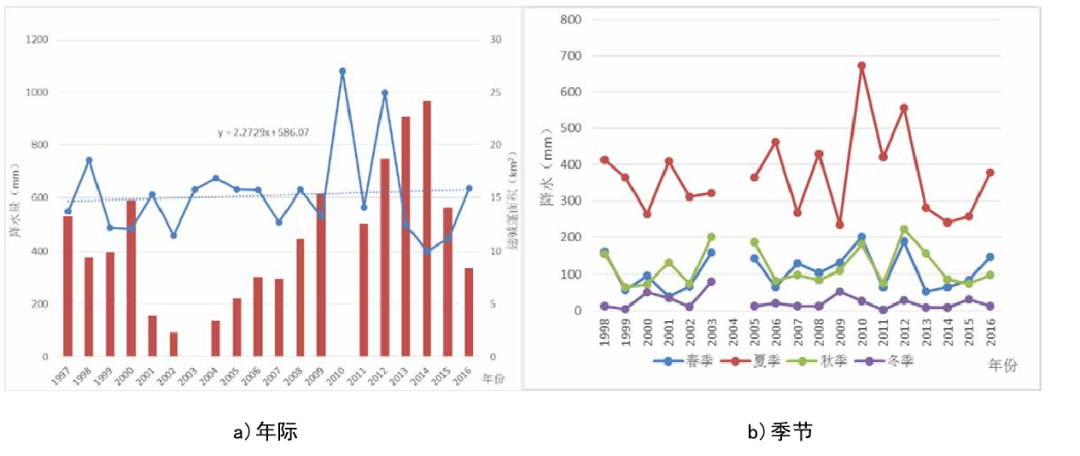
The annual rainfall of Panjin Wetland decreased significantly from 1955 to 2015, with an average annual rainfall of 211.41 mm, decreasing at a rate of 4.253 mm per year. Before 1980, the precipitation in Panjin Wetland did not decrease significantly, with an average precipitation of 310.06 mm, especially after 1980, the decrease trend of precipitation was particularly obvious, the average precipitation was 142.90 mm, and the precipitation decreased by 167.16 mm. Part of the water supply of wetlands depends on precipitation. The reduction of precipitation will reduce soil water content. Wetland plants generally require a large amount of water. The reduction of soil water content will affect the original plants of the wetland, which will affect the wetland landscape pattern, Zhang Heping found.
2. Human Factors
1. Environmental pollutants
The water environment in the wetland is a vital part of the wetland system. The quality of the water quality in the water environment will determine the survival of the entire ecosystem. Every year, a large amount of pollutants flows from the estuary to the sea from the land through the river, which leads to the near estuary. And there will be high concentrations of pollutants in seawater and sediments in coastal waters, and the degree of pollution will gradually deepen and the scope of pollution will continue to expand. Studies by Sun Zhen et al. showed that the higher the pollutant content in the water, the smaller the area of Suaeda chinensis. According to the data from the Liaohe Panjin Xing'an Station of the Environmental Protection Data Center of the People's Republic of China, the concentration of water pollutants showed a downward trend year by year from 2004 to 2014.

2. Human activities
The development of tourism resources, the influx of tourists, the intensification of human interference, and the intensification of pollution have led to the gradual degradation of the Red Beach Wetland; the population of Panjin City has expanded rapidly. The sixth population census has a population of 1,392,493, which is an increase of 10 years compared with the fifth census. 130,740 people. The increase in population increases the consumption and occupation of various natural resources by human beings, such as living area, food and water resources. Moreover, with the increase of the total population and urban population of Panjin City, the city continues to develop and expand. At the same time, the development of agriculture, animal husbandry and oil development occupies a large amount of wetlands. From the previous analysis, it can be seen that the decrease in rainfall in Panjin, coupled with the sharp increase in population, increases the domestic water consumption, resulting in a decrease in the amount of water allocated to the wetland environment, thus prompting changes in the landscape pattern of Panjin wetlands.
3. Agricultural development
The large-scale development of farmland has led to a reduction of 67.23 km2 of natural wetlands, and the change of land use patterns has led to a substantial reduction in the area of land where Suaeda chinensis can grow. The natural wetland ecosystem on the east bank of the Liaohe Estuary has gradually changed into an artificial ecosystem under human intervention, and the coastal saline-alkali soil and meadow soil have been transformed into agricultural fields. From 1988 to 2000, the large-scale development of farmland resulted in a reduction of 67.23 km2 of natural wetlands, and the change in land use patterns resulted in a substantial reduction in the area of land where Suaeda chinensis vegetation could grow.
The construction of the delta plain reservoir occupies an area of 13.6 km2 of natural wetlands. After the completion of the reservoir construction, the fresh water in the upstream will be stored, and the amount of fresh water flowing to the seawater will be reduced, which will greatly affect the soil salt content and the exchange of material and energy in the Suaeda serrata habitat. Impact. It can be seen from the figure that in 1988, the area of Suaeda chinensis vegetation growing in the Hunjiang ditch was 11.36 km2, and by 2000, the area of Suaeda spp. in the Hunjiang ditch was greatly reduced, and attenuated to only 0.4 km2.
VI. Progress of Wetland Project
1. Progress of some achievements of the Institute of Ecology
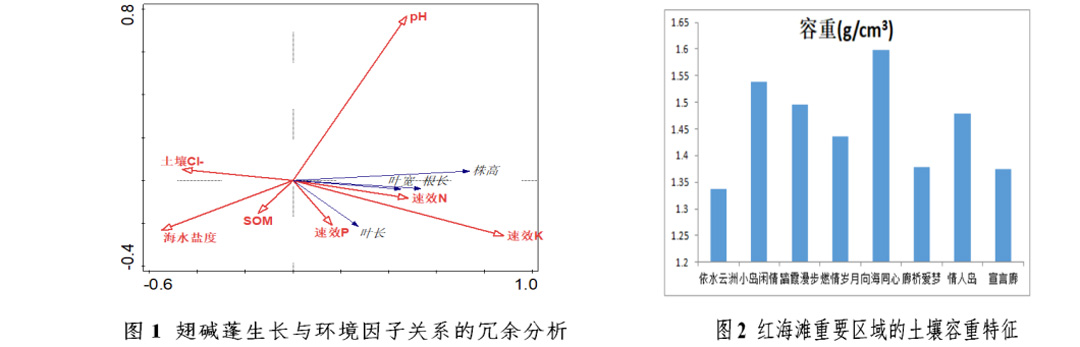
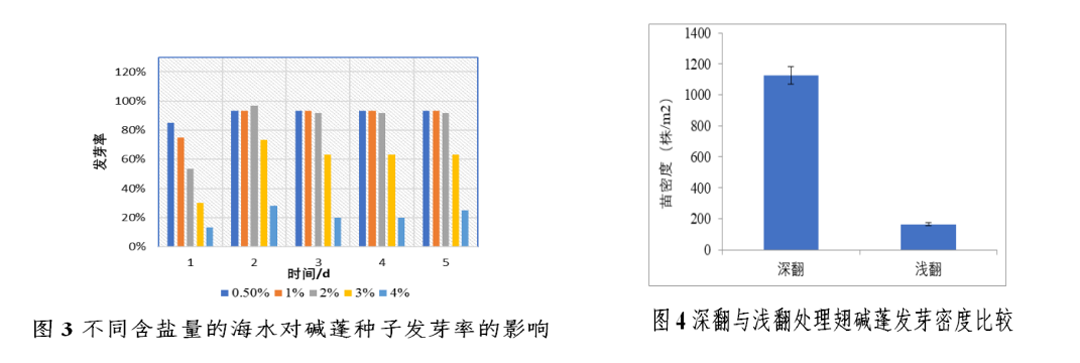
The ecological environment of Red Beach was evaluated to gain an in-depth understanding of the impact of the environment on the germination rate of Suaeda chinensis. Based on this, soil amendments were studied. The salinity, burial depth, ploughing and addition of amendments were studied. The results showed (Figure 3) salinity The growth of Suaeda serrata has a tendency to inhibit; the deeper the roots are buried, the better the growth of Suaeda serrata; comparing the treatments of deep plowing and shallow plowing (Fig. 4), the germination rate under the same seeding density is 1100 plants/m2 for deep plowing and shallow plowing. The density of turned seedlings was only 162; summarizing the above experimental results, two soil amendments were developed for indoor tests. Combined with the turning method, it was found that the average number of leaves of Suaeda serrata in experiments 1 and 2 was better than other treatments, and they grew longer. is dense (Figure 5). After obtaining good results in the indoor test, the field test of soil amendments was carried out (Figures 6 and 7). A total of 4 soil amendments and 16 remediation treatment sites were set up to study the dosage and application time of different amendments. The effect on the growth of Suaeda spp. was found to be significantly different among the treatments. Compared with the control, the effect of taking restoration measures was significantly better than that of no measures.
2. Research on the germination technology of Suaeda chinensis seeds
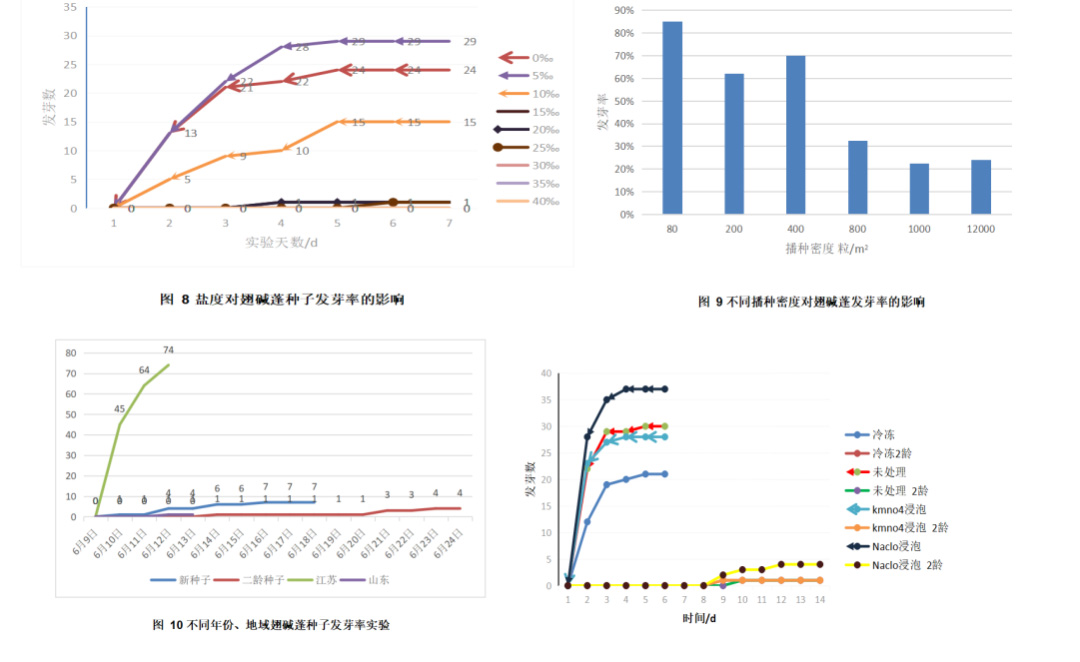
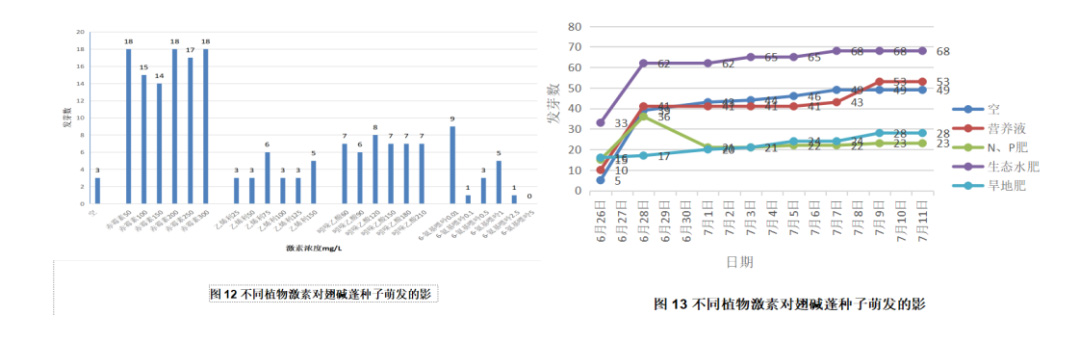
When studying environmental factors such as salinity, density, different fertilizers, and different regions that affect the germination rate of Suaeda spp ‰The seeds did not germinate (Fig. 8); while the higher the seeding density of Suaeda spp., the lower the germination rate of seeds, and the density of 400 seeds\m2 was the most moderate (Fig. 9). Comparing the seed germination rates of Suaeda serrata in different regions, it was found that the longer the seed storage period, the higher the germination rate. Compared with Shandong, Liaoning and Jiangsu, the seed germination rate of Suaeda chinensis was the highest (Fig. 10). In order to improve the germination rate of seeds, reduce the amount of seeds used in the restoration process, and reduce the cost of developing seed germination technology, different seed treatment methods, different plant hormones, and different fertilizers were selected for comparative experiments, and the results were analyzed and compared using sodium hypochlorite treatment, gibberellin soaking, and simultaneous application of The slow-release water and fertilizer had a significant effect on the germination of Suaeda chinensis seeds (Figures 11, 12, and 13).
3. Study on the growth of Suaeda chinensis under different environmental factors
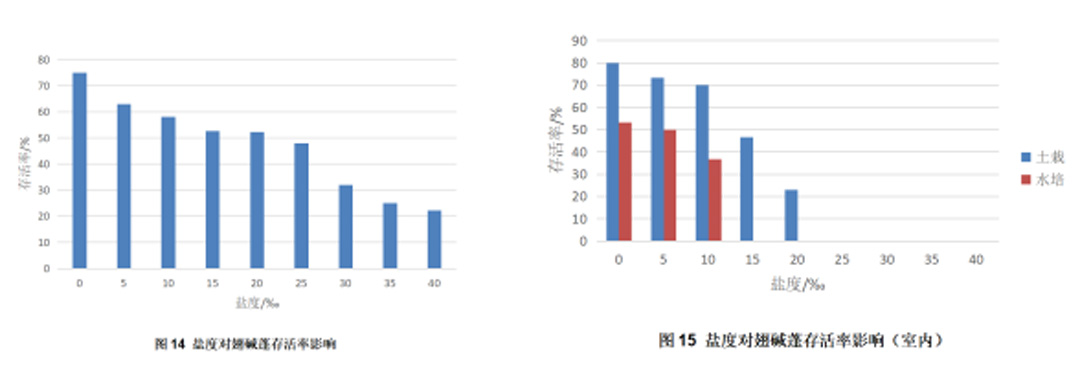
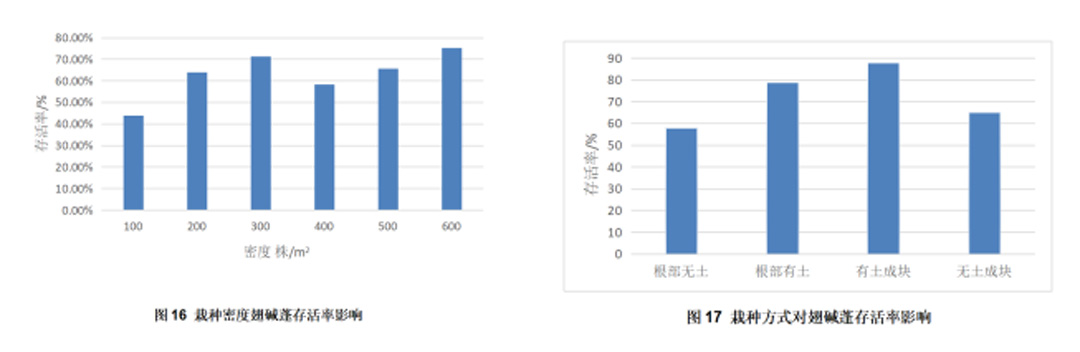
In order to ensure the success rate of Suaeda spp Freshwater and seawater with different salinity were alternately irrigated, and the results were the same. The salinity of more than 20‰ had an inhibitory effect on the growth of Suaeda serrata. In the soil culture experiment, the survival time of Suaeda spp. was longer than that of hydroponic culture, but eventually all died when it exceeded 20‰, while mixed watering The experimental salinity exceeded 20‰ Suaeda spp. survived, indicating that moderate watering of fresh water can reduce the salinity of the tidal flat surface and improve the survival rate of Suaeda spp. (Figures 14 and 15). During the experiment of different planting densities, it was found that the lower the density, the higher the survival rate of Suaeda spp. The growth condition is better than the high density density, and the comprehensive comparison planting density is 300 plants\m2 (Fig. 16). Comparing the four planting methods, we must pay attention to the protection of the roots of Suaeda serrata during the planting process. The transplanting survival rate was the highest (Fig. 17).
4. Wetland field test
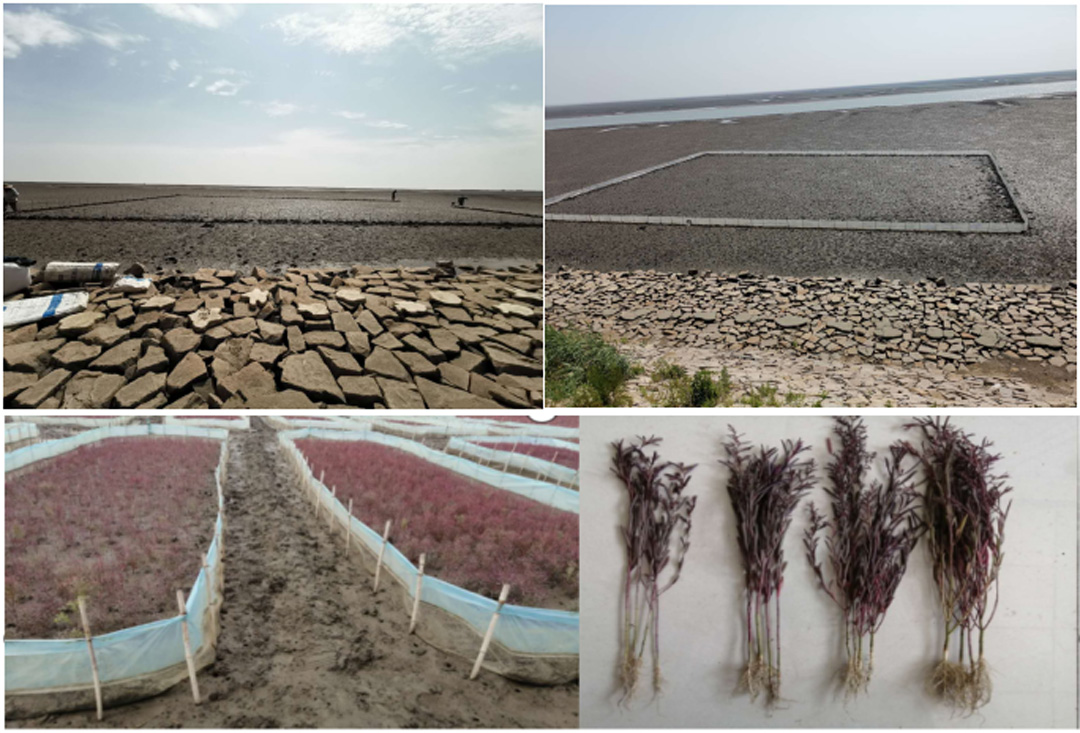
The comparison experiment of seeding density and fence construction was conducted on the site of Hongtan Beach, and the community restoration experiment with Ecology Institute and Zuo has achieved remarkable results.
R&D Center: Zuo Bingnan

Photosynthetic crab rice home
WeChat | ghxiedaojia
This is a public account with a soul


