Party building column
Do not forget the original intention and keep the mission in mind
1921-2021
The 100th Anniversary of the Communist Party of China
The big river goes east, the waves are exhausted, and the romantic characters of the ages. In the starry sky of history, countless geniuses and heroes, like bright stars, radiate dazzling rays of light, illuminating the way forward in human history. They fought bloody battles, they were loyal and brave, or they were poetic and poetic, and they were laughing and laughing; some great people said that those who are romantic and romantic, also look at the present. So today, let us talk about the romantic figures of ancient and modern times, and relive the great influence and brilliant achievements they have brought us.
Qu Qiubai:
Want to open a bright road for everyone
Warmly celebrate the 100th anniversary of the founding of the Communist Party of China

Qu Qiubai, one of the early main leaders of the Communist Party of China, a great Marxist, an outstanding proletarian revolutionary, theorist and propagandist, is one of the important founders of the Chinese revolutionary literature. In January 1899, Qu Qiubai was born in Changzhou, Jiangsu Province. In 1917, he was admitted to the Beijing Russian Language Institute to study. In 1920, he went to Soviet Russia as a reporter for the "Morning News" and wrote several newsletters. , workers' organizations, party building, etc. have been systematically expounded.
In 1922, Qu Qiubai joined the Communist Party of China. In January 1923, after returning to China, Qu Qiubai served as the editor-in-chief of "New Youth" and other publications, published a large number of political papers, used Marxism to analyze China's national conditions, inspected China's social conditions, demonstrated China's revolutionary issues, and made pioneering contributions to the party's ideological and theoretical construction. .
Since 1925, Qu Qiubai has been elected as a member of the Central Committee, a member of the Central Bureau and a member of the Political Bureau of the Central Committee at the Fourth, Fifth and Sixth National Congress of the Party, and has become an important leader of the Communist Party of China.
In August 1927, when the Chinese revolution was in a serious crisis, the Central Committee of the Communist Party of China held an emergency meeting (ie, the August 7 meeting) in Hankou, Hubei. The meeting was chaired by Qu Qiubai and Li Weihan. The meeting determined the policy of implementing the agrarian revolution and armed uprising, put forward the task of rectifying the ranks, correcting mistakes and "finding a new path", and elected a new Provisional Political Bureau of the Central Committee of the Communist Party of China headed by Qu Qiubai. After the meeting, he served as a member, standing member and chairman of the Provisional Political Bureau of the CPC Central Committee.
In January 1931, Qu Qiubai was dismissed from the central leadership position at the Fourth Plenary Session of the Sixth Central Committee of the Communist Party of China. After that, he led the struggle on the left-wing cultural front with Lu Xun in Shanghai.
In early 1934, Qu Qiubai entered the Central Revolutionary Base. In February 1934, he was elected as a member of the Second Central Executive Committee of the Chinese Soviet Republic, a member of the Presidium of the Central Executive Committee, and a member of the Education People's Committee of the People's Committee of the Central Executive Committee. He served as the Central Government of the Chinese Soviet Republic. Minister of Education. After the Long March, the main force of the Central Red Army, he stayed in the south to insist on guerrilla warfare, and served as the head of the propaganda department of the Central Branch of the Communist Party of China in the Soviet area.
In February 1935, Qu Qiubai was arrested by the Kuomintang army in Changting, Fujian. After the enemy learned of his identity, he took various means to induce him to surrender, but he strictly refused. On June 18, Qu Qiubai calmly walked to the execution ground, drank bullets and shed blood, and died calmly at the age of 36.
Yun Daiying:
Eternal role model for Chinese revolutionary youth
Warmly celebrate the 100th anniversary of the founding of the Communist Party of China
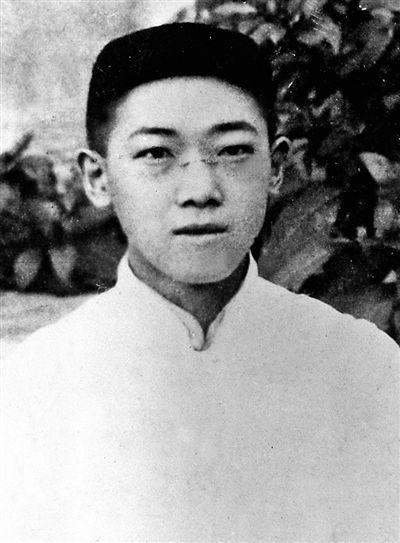
In 2009, he was elected as one of "100 heroic and exemplary figures who have made outstanding contributions to the founding of the People's Republic of China".
Yun Daiying, originally from Wujin, Jiangsu, was born in Wuchang, Hubei in 1895. In 1915, he entered Chung Hwa University to study. He actively participated in revolutionary activities during his student days and was one of the main leaders of the May Fourth Movement in Wuhan. In the spring of 1920, Yun Daiying went to Beijing, established contacts with Li Dazhao, Deng Zhongxia, etc., and began to study and accept Marxism. Later, he was commissioned by "New Youth" magazine to translate and publish Kautsky's mid-term book "Class Struggle", which had a profound impact on important leaders such as Mao Zedong, Zhou Enlai and Dong Biwu.
Yun Daiying joined the Communist Party of China in 1921, and became a professor at Shanghai University in 1923. In August of the same year, he was elected as an alternate member of the Central Executive Committee of the Chinese Socialist Youth League, director of the Propaganda Department, and the founder and editor-in-chief of "China Youth", which cultivated and influenced the entire generation of youth.
In 1924, Yun Daiying engaged in the united front work of cooperation between the Kuomintang and the Communist Party. In 1925, he participated in leading the May 30th Movement. In May 1926, he was sent to the Whampoa Military Academy by the party as a political director. In January 1927, he went to Wuhan to preside over the work of the Central Military and Political School and served as the chief political instructor, and fought resolutely against Chiang Kai-shek and Wang Jingwei's betrayal of the revolution. In July, Yun Daiying was ordered by the Central Committee to go to Jiujiang to serve as a member of the Front Enemy Committee of the Central Committee of the Communist Party of China, participating in the organization and launching of the Nanchang Uprising. In December, he participated in leading the Guangzhou Uprising and served as Secretary General of the Guangzhou Soviet Government.
In 1928, Yun Daiying went to Shanghai to serve as secretary-general of the Propaganda Department of the Central Committee of the Communist Party of China and secretary-general of the Organization Department. In June 1929, he was by-election as a member of the Central Committee at the Second Plenary Session of the Sixth Central Committee of the Communist Party of China.
On May 6, 1930, Yun Daiying was arrested by the Kuomintang authorities in Shanghai. In prison, Yun Daiying was unyielding in the face of the coercion and temptation of the enemy. On April 29, 1931, he was killed in Nanjing at the age of 36.
"Wandering around in the rivers and lakes recalls the old travels, so life and death are different. I have been worried about ordinary things, and I have left my pride as a prisoner of Chu." This is a heroic poem written by Yun Daiying in prison. Zhou Enlai spoke highly of Yun Daiying: "His proletarian consciousness, work enthusiasm, strong will, simple style, sacrifice spirit, mass-oriented quality, and touching persuasion should always become a model for Chinese revolutionary youth."

Photosynthetic crab rice home
WeChat | ghxiedaojia
This is a public account with a soul


